


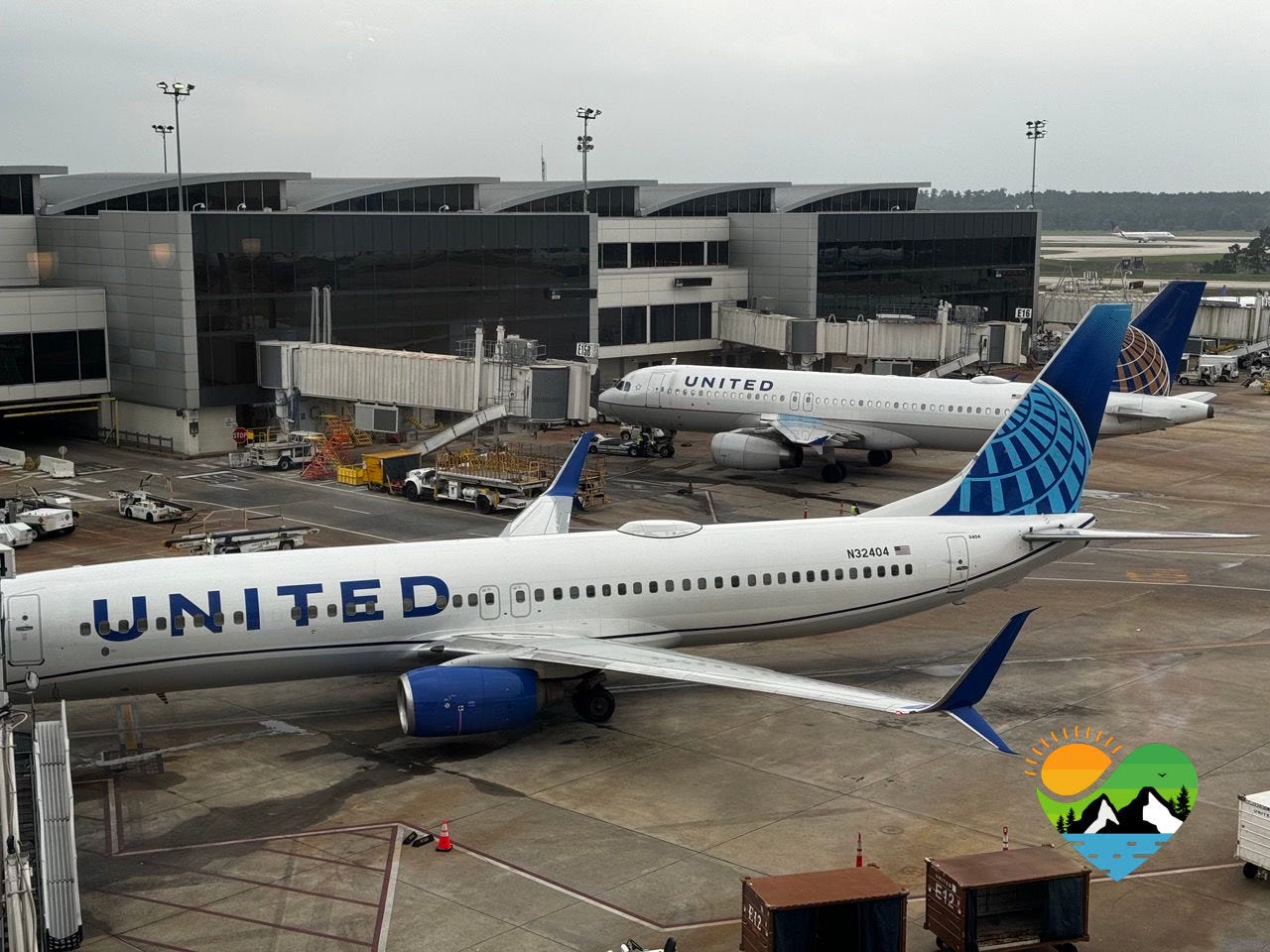
A news headline caught my attention recently:
A U.S. airline will now remove passengers who refuse to wear headphones when listening to audio on their devices.
Good idea, in my humble opinion. But let’s dive a little further. The story, on my Canadian Apple News, was quietly framed as an example of American airlines cracking down on “Canadian travellers.” I’m not sure if this is considered clickbait, political misinformation, or something in between. Either way, the headline was less about headphones and more about the way two great countries are pitched against each other in an ongoing trade war. Give me a break. Wearing headphones has little to do with cross-border tension, nationality, politics, or travel friction between countries.1
The “U.S. airline” vs “Canadian travellers” framing felt unnecessary and frankly a little manipulative. This isn’t an American rule targeting Canadians. It’s not a geopolitical issue. It’s not some new front in the never-ending media cycle of cross-border outrage. The way this story was framed says more about the current media environment than it does about the policy.
The real story is about something much simpler: basic etiquette. if you are sharing a confined public space with hundreds of other people, please use headphones. That’s it. If you’ve spent any time in public lately, you’ve probably noticed that basic etiquette around audio seems to be disappearing. So let’s talk about that.
The strange new social experiment
There’s a strange new phenomenon that seems to have quietly become normal: people walking around holding their phones in front of their faces on FaceTime speakerphone. Seriously, who invented this? Scrolling social media feeds with the audio blasting is a private experience, nobody else cares. People watching videos on full volume in cafés, waiting rooms, transit, or airplanes - did you forget your headphones, or you just don’t care about anyone else?
The sound is always the same: that unmistakable tin-can audio coming from a phone speaker somewhere in the vicinity. Once you notice it, you start hearing it everywhere.
This is not about perfect silence in public. Cities, travel, and life can be noisy, messy experiences. That’s kind of the point. But do we really need to add to that? There’s a difference between ambient noise and someone broadcasting their personal media to everyone around them. Again, nobody cares.
The airplane example
Airplanes are actually a great example of why this matters. Space is confined, and for several hours you get to spend quality time with a couple hundred complete strangers in an air-compressed tube. Everyone is sharing the same small space, which (especially in row 37 by the bathroom) is already a bit uncomfortable. The least we can do is try to make that experience tolerable for one another.
Most airlines have always had a rule that you must follow crew instructions. In theory that could already include being told to mute your phone or use headphones. Since common sense isn’t that common, United Airlines simply decided to make the expectation explicit.
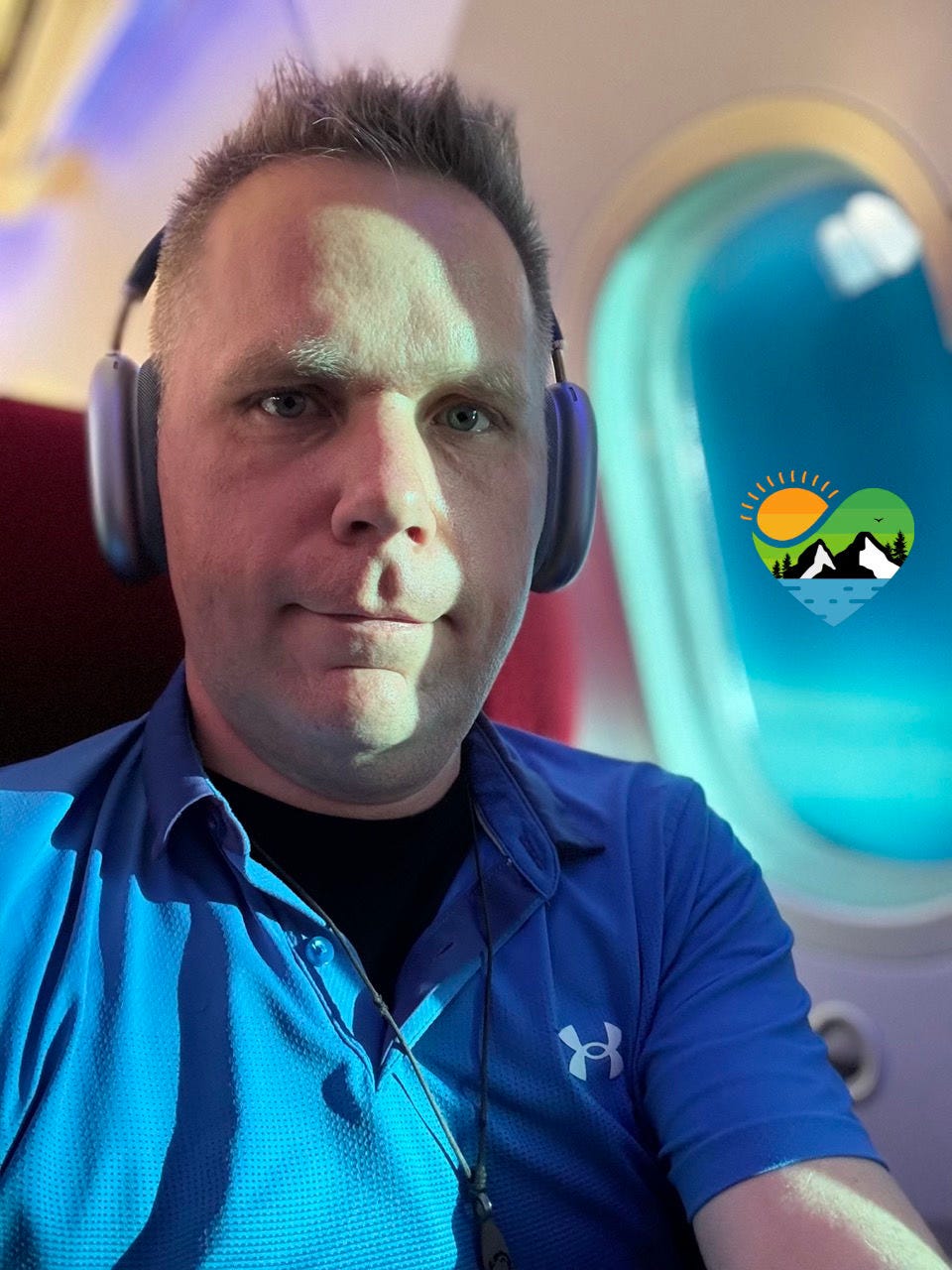
If you want to listen to something on your phone or tablet, use headphones. If you refuse after being asked, you could be removed from the plane. Sounds like a good idea. I’m not even a big United fan2, but on this one I think they got it right.
The yoga studio moment
The story popped up on my newsfeed right after I experienced a smaller version of the same problem, when I arrived early at a yoga studio. The room is clearly marked as a no-phone zone, which is meant to give people a quiet space to decompress before class starts.
Someone didn’t get the message and walked in while playing audio on her phone. The instructor hadn’t arrived yet, and nobody said anything. I couldn’t help wondering that if the rule says “no phones,” maybe she should’ve been kicked out as well? Where is United cabin crew when you need them most?
The thing that makes this whole debate even more absurd is how easy the solution is: headphones can be tiny, and easily fit into your pocket. Using earbuds isn’t some oppressive rule, but a small gesture of consideration for the people around you. And if you needed one more reason: Smart phones do not come with good enough speakers designed for public listening anyway.
Maybe more places should adopt the rule
The United policy might sound strict, but in practice it’s just putting into writing something that most people already understand: don’t play audio in shared spaces, like airplanes, trains, cafés, and yoga studios.
The rule itself isn’t particularly newsworthy. What is worth noting is that airlines feel they need to formalize something that used to be basic social etiquette. Hopefully most of us can figure that out without needing a contract of carriage to enforce it. For the rest of us, you’ve been warned.
Get Into Action
Travel is full of little details that make the experience better or worse. Etiquette, preparation, and understanding how systems work can transform a frustrating trip into something memorable. I share many of those insights in my book The Freedom Project: Travel, where I break down the mindset and practical strategies that help people travel better and more intentionally. If you’re curious about making travel a richer part of your life, it’s a good place to start.
Further reading


With rising political tensions and economic uncertainty, many Canadians are questioning whether to cancel their trips to the United States. With a weaker Canadian dollar and skyrocketing domestic hotel prices since COVID, it feels we can’t win here. Traveling within Canada isn’t always the better financial choice. Is canceling a U.S. trip really necessary? Or is there a smarter way to navigate these murky waters? Full story here.