


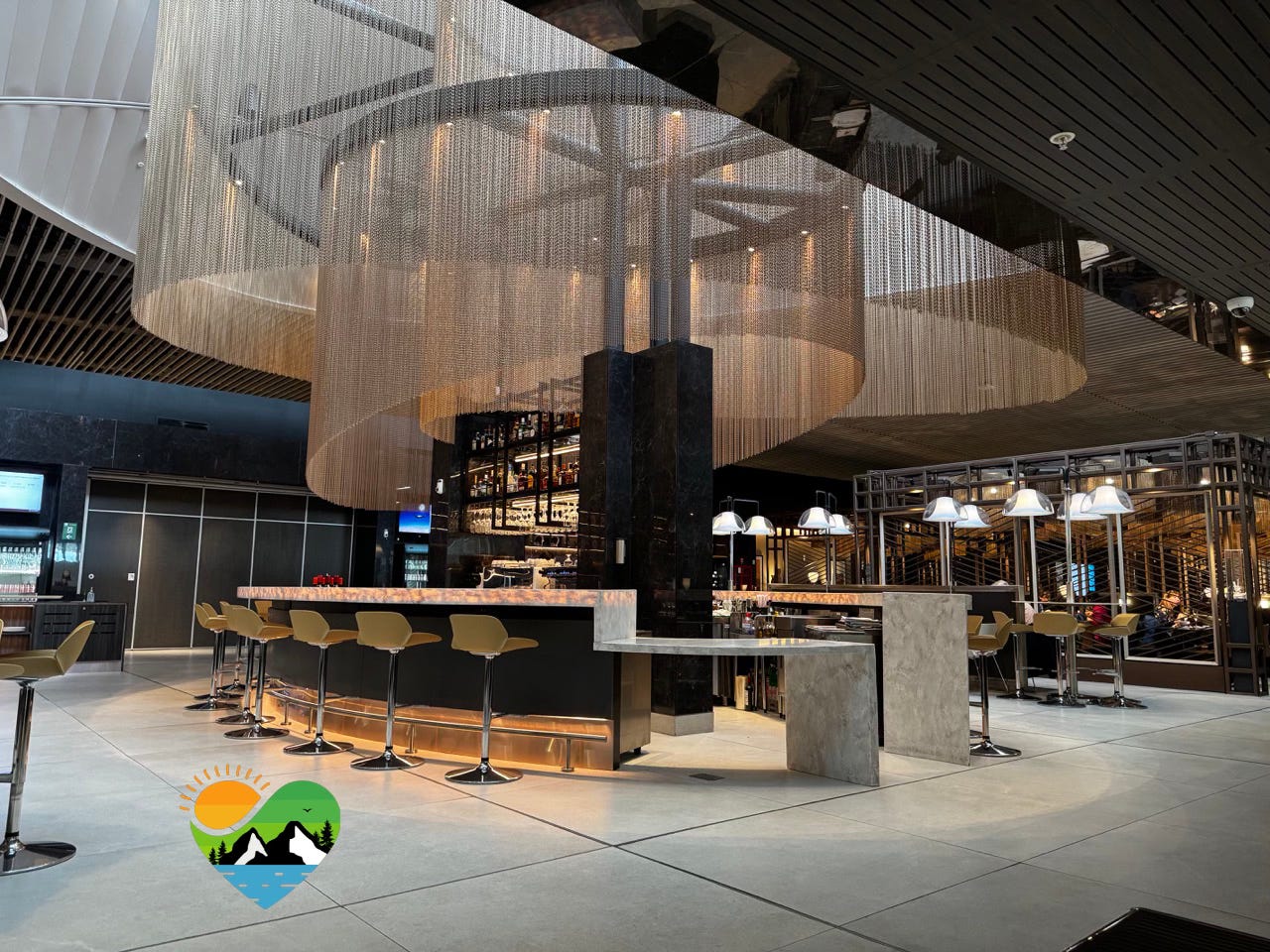
The cover image for this story was taken in the airport lounge before my flight from Santiago, Chile to Lima, Peru. LATAM did it right: a truly quiet, premium space with a great food and beverage selection. But it’s not always like that. Sometimes the “lounge” feels more like mix between a crowded coffee shop and a daycare facility, than the premium experience it used to resemble. With so many credit cards now offering access, you wonder if it’s quieter outside the lounge than in. What used to feel like a quiet pre-flight escape now has lineups, crowds, and a mediocre buffet of lukewarm soggy food. Was it a mistake to even deal with the lineup to get in?
But there’s good news: some changes are coming. American Express, amongst other providers, is tightening lounge access. A lot of headlines focus on the impact for US cardholders, but the effects are very real for Canadians too.
Right now, the Canadian Platinum Card still gives access to Priority Pass lounges, Plaza Premium lounges (a big one in Canada) and Centurion Lounges where available. In the US, guest lounge access is tied to annual spend on the card, a model they’re now starting to introduce in Canada.
Starting in 2027, you’ll see more subtle restrictions, with limits on your lounge visits limits and guest policies, and a gradual shift toward rewarding higher spend.1
When the lounge becomes worse than the terminal
I’ve had a few moments recently where I walked into a lounge and thought, this is actually worse than outside.
The Plaza Premium lounge in Vancouver US departures used to be a decent option. Lately, it’s been hit or miss at best. Packed seating, food lines, and people on speakerphones. The noise levels and cramped feeling completely defeat the purpose of being there.
And then there was the Air Transat lounge in Cancun. I’m not exaggerating when I say it might have been one of the worst (and shortest) “lounge” experiences I’ve had. Overcrowded, chaotic, and somehow more stressful than just sitting at the gate. With several families with screaming kids, it felt like a daycare facility that served alcohol.2
At that point, what are we even paying for?3
“When everything is premium, nothing is.”
The real issue isn’t access. It’s behaviour.
Some people think of “travel hacking” as pure optimization with no regard for sustainability. People sign up for cards, grab the welcome bonus, and then barely use the card. Rinse and repeat.
This is credit card churning. Technically clever, but short-sighted.4
That kind of “travel hacking” overloads the system, devalues the experience, and forces companies to tighten rules for everyone. It’s like abusing the Costco return policy. It’s flexible, but even the Costco return policy will turn against you if you abuse it. Eventually every system corrects itself to prevent abuse.
So by tightening the lounge access benefit, Amex is trying to restore balance. Premium providers are happy to provide premium experiences, but only if there’s a real relationship behind it. As a card provider, they’re not so much interested in building a relationship with cardholders, but with cardholders using their product.
A more sustainable approach to travel hacking
So at first glance, you may think “less benefits for the same annual fee”. But if fewer people get unlimited, frictionless lounge access, the experience inside improves for those who are there.
Maybe it’ll be a step closer to what lounges originally were meant to be: more space, less noise, and better service. If you’ve ever sat in a packed lounge wondering why you even bothered, you may appreciate this system resetting itself.
This ties directly into the travel hacking system I’ve been teaching for years:
Travel hacking isn’t about gaming the system until it breaks. It’s about understanding how the system works and using it in a way that creates long-term value.
That means using your cards strategically, following a system that’s designed to build real relationships with programs, and leveraging perks without abusing them. Yes, my approach to travel hacking is slower, but more intentional. And most importantly, it’s sustainable if you stick with it.
The irony is that this “long game” approach often leads to better travel experiences anyway. The play isn’t to panic or churn harder, it’s to adapt early, before these changes come into effect next year.
Get Into Action
If you want to build a travel strategy that actually holds up over time, not just for the next welcome bonus cycle, I walk through this in detail inside my Travel Revolution course. You can preview it for free and see if it fits your style of travel.
In the full Travel Revolution course I teach a sustainable travel hacking system that works for everyone, without taking advantage.
And for my VIP subscribers, I’ll include a private link to access an Amex referral bonus that isn’t publicly available below. If you’re going to play the game properly, not just chase points for the sake of it, this may be worth it for you.
Elevated Amex Invitation
New Platinum® Cardmembers can earn 110,000 140,000 Bonus points, which is enough for up to $1,400 of travel credits. This invitation link is not available to the public. Unlock my private invite below, or find it in my own VIP Lounge. 😊
