


Before I get into this, a quick disclaimer: I’m not a safety expert and I’m certainly not suggesting anyone ignore government travel advisories. Those exist for a reason. My story today is simply about making your own assessment instead of letting the latest social media panic or media headlines decide where you feel comfortable traveling.
Earlier this month I wrote about travel advisories and how they deserve a bit more interpretation than people realize.1 Advisories are important, and I’m not suggesting they should be ignored. But they’re also not the full story.
I wrote that post at the tail end of my recent Mexico trip. In the weeks since then, I’ve been watching something unfold in the news that I found a bit one-sided.
If you follow the same headlines, you might have noticed stories on Canadian travellers who are suddenly reconsidering their spring break travel plans because of “ongoing tensions” in places like Mexico and Cuba. The coverage makes it sound like something is actively unfolding right now.
But the reality is a bit different. The incident that triggered most of the Mexico coverage happened nearly four weeks ago in several Mexican states, including the popular tourist destination Puerto Vallarta2. Within about a week, flights resumed and reports suggested things were getting back to normal there. Yet weeks later, the headlines keep repeating the same narrative as if it’s still unfolding in real time, today.
That disconnect between headlines and reality caught my attention even more because I was actually in Mexico this month.
The trip I almost second-guessed
My own trip was scheduled to depart only days after the Puerto Vallarta incident. The timing wasn’t great. And to be honest, what I saw in the news made me pause. I’m not immune to those headlines. When you see the same story repeated over and over again it’s easy to start wondering if you’re being reckless by going ahead with your plans.
My trip wasn’t even to Puerto Vallarta. I was headed to Tulum on the Caribbean side of the country. For context, Puerto Vallarta is in the state of Jalisco on Mexico’s Pacific coast. Tulum sits on the opposite side of the country near Cancun. The distance between the two is roughly 2,500 kilometers. If you were to drive it, you’d be looking at around thirty hours on the road.
At one point Cancun briefly appeared on the Canadian travel advisory website in relation to the situation. I spent some time trying to understand why, because I couldn’t find any reports of related incidents in that area.
As always, I was doing my homework before departure.
Choosing to travel differently
Part of what made me pause was the style of trip I had intentionally chosen. Instead of booking an all-inclusive resort, I had selected a small luxury hotel in Tulum, which was featured on FoundersCard.3 I wanted to explore the area properly. The hotel even provided bicycles so guests could ride around to nearby ruins, cenotes, beaches, and the national park.
It was exactly the kind of travel experience I enjoy. But it also meant I wasn’t going to spend the week inside the alleged safety of a resort bubble.
The question naturally crossed my mind: had I made the wrong call? I considered cancelling, or changing to a different type of vacation than what I had planned. Maybe it would be better to be “stuck” on a resort after all?4
What I actually experienced
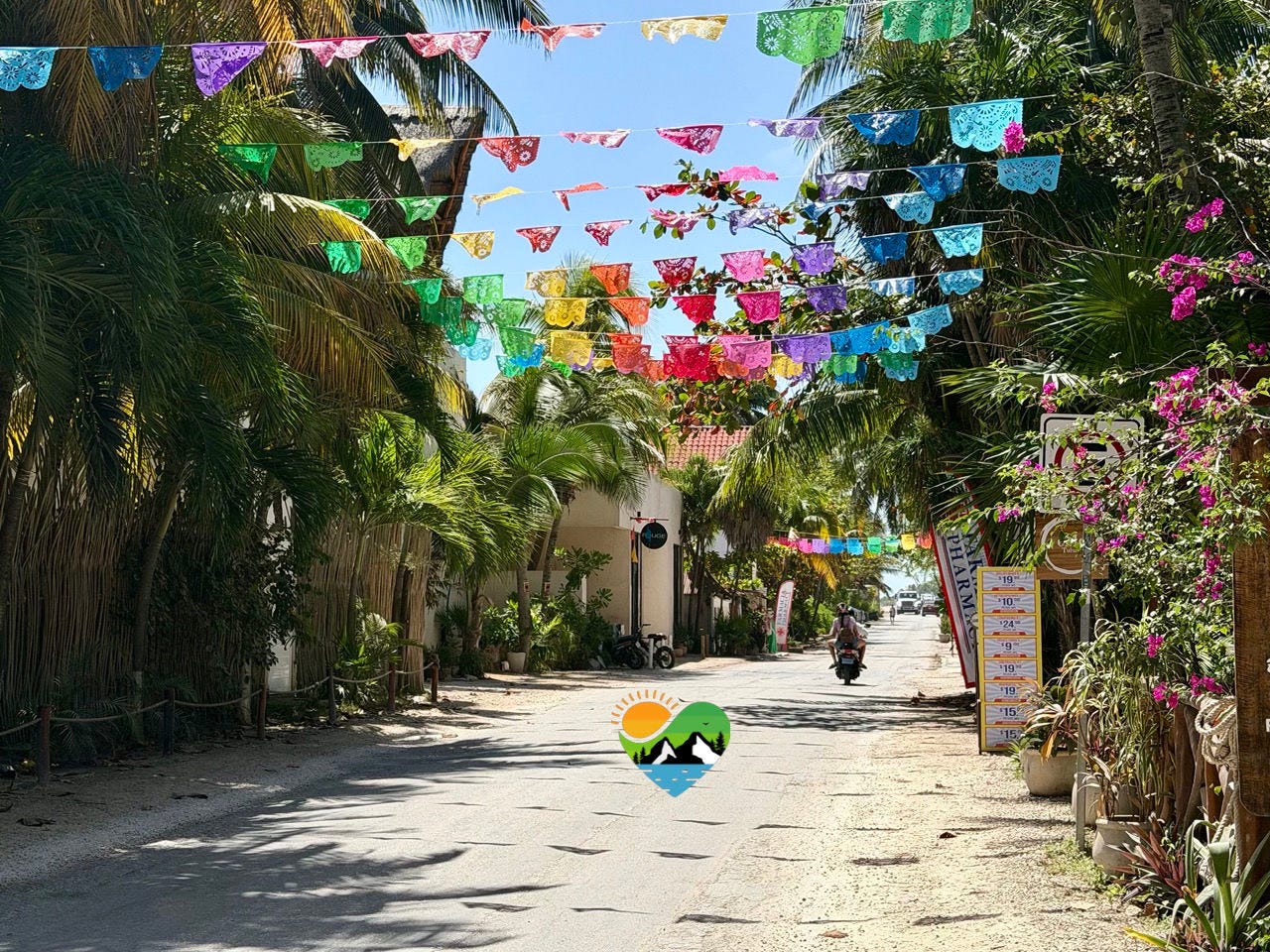
Once I arrived, the picture looked very different from the stories shared in the media before (and during) my trip.
Yes, there was a visible presence of Mexico’s National Guard. Trucks with guards in military uniforms patrolled the town frequently. Some had mounted machine guns on the roof and a full crew standing in the back of the truck. At first glance, it’s a little intimidating.
But, as always, the context matters. These patrols were clearly there to maintain safety in a region that depends heavily on tourism. They drove along the beach roads, sometimes stopping near busy areas where visitors were walking between restaurants and beach clubs.
And they were surprisingly friendly. At one point a truck passed while I was walking along the beach road. I nodded and said, “Thanks guys.” They smiled and waved.
The message from the locals
The message from local people working in restaurants, hotels, and small shops was equally friendly. They want tourists to come and visitors to feel safe. They want people to understand that the headlines often don’t reflect what daily life actually looks like.
Tourism is a huge part of the local economy in places like Tulum. The people there have every incentive to keep things welcoming and safe. During my entire stay, I never felt unsafe.
We rode bicycles around town. We explored beaches and cenotes. We ate at local restaurants instead of resort buffets serving pizza and pasta for international tourists.
My trip felt like normal travel.


The reality about safety while traveling
My story doesn’t mean you should ignore safety altogether. Quite the contrary. You should absolutely pay attention to your surroundings, especially when you’re outside the resort areas. Stumbling home drunk after a late night party is rarely a good idea anywhere in the world. It doesn’t matter whether you’re in Vancouver, Amsterdam, New York, or a Mexican beach town.
Travel always involves a bit of situational awareness. That’s part of being a responsible traveler. But there is a big difference between sensible caution and the kind of fear-driven narrative that has been dominating the news lately.
News cycles are built around conflict and dramatic events. A single incident can generate weeks of good stories because it captures attention. The far more common story of millions of people traveling safely every year without incident, isn’t media-worthy. There’s no conflict there, and as such, no story to sell. The quiet normality doesn’t make the news.
Reading recent articles about Canadians changing their spring break plans because of “ongoing tensions” felt strange after having just returned from Mexico myself. The place I experienced on the ground looked nothing like the picture being painted in those headlines.
Make your own assessment
None of this is meant to dismiss travel advisories or suggest that risks don’t exist. Every destination carries some level of risk, and everyone has their own comfort level when it comes to travel decisions.
The key is to look beyond the headlines and make your own assessment based on multiple sources. Understand the geography. Know where you’re going and what you’re getting yourself into. Look at what is actually happening in the specific region you plan to visit.
And if you do decide to go, travel with awareness and respect for the place you’re visiting. That approach will take you much further than reacting to the latest news headline.
Get Into Action
Travel has a way of expanding your perspective in ways headlines never can. If you’ve ever wanted to travel more intentionally, explore beyond the resort bubble, and learn how to unlock better travel experiences along the way, that’s exactly what I share in my book The Freedom Project: Travel. It’s a practical guide to making travel more accessible, more meaningful, and far more rewarding than simply following the crowd.
If you’re ready for more and want to go beyond the book, check out my travel hacking program the Travel Revolution. Previews are always free.
Further reading


Over the last few years, travel advisories have started to feel like weather alerts that never expire. Everywhere is yellow. Some places are orange or red. Open any government travel page and you’d think the entire planet is on the brink of collapse. Full story here.
Nemesio Oseguera Cervantes, known as "El Mencho," the leader of the Jalisco New Generation Cartel, was killed during a military operation in Mexico on February 22, 2026. His death has led to significant violence and unrest across several states in Mexico, including roadblocks and attacks by cartel members.
FoundersCard is a private membership community of entrepreneurs and innovators who receive exclusive benefits, premium travel perks, and valuable networking opportunities. Access is by invitation only and subject to review and approval. Read my review on it here.
Spoiler alert: it wasn’t. Blog post on why I avoid all-inclusive hotels to follow in the near future.