


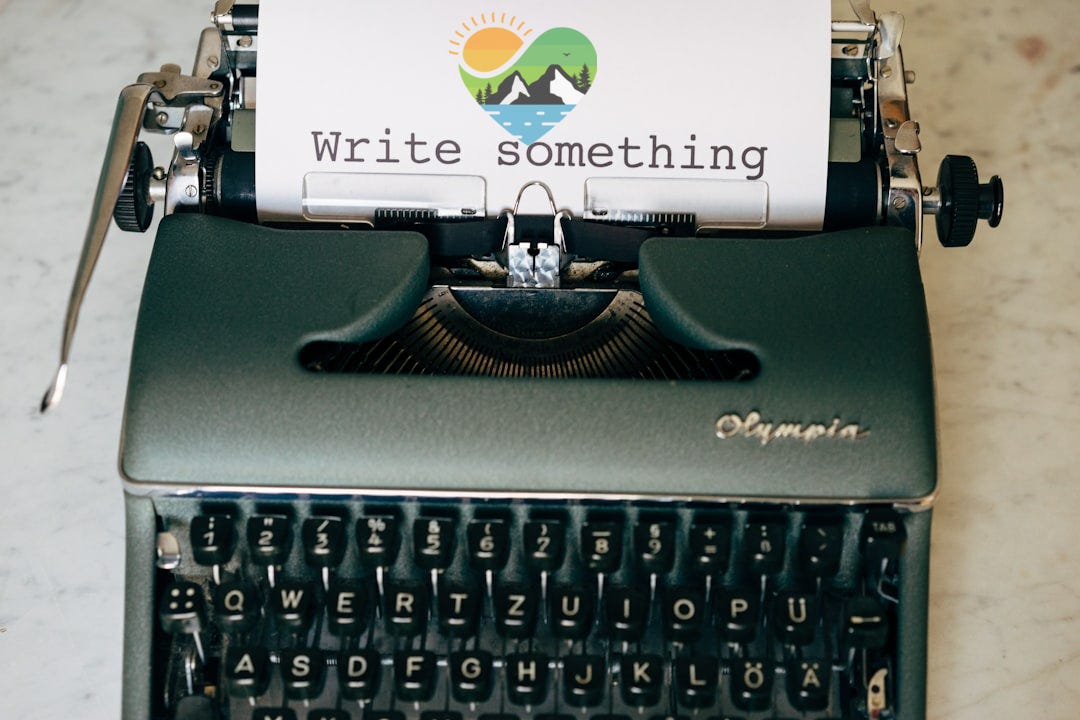
I’ve recently updated my author course “Write a Book in a Week”, and the whole program is once again available as a single masterclass. While going through the content, I kept thinking about what it actually means to write a book these days? Especially with AI, it’s never been easier to produce something that looks like a book.
You could give an AI chatbot a topic, ask for ten chapter ideas, and tell it to expand each chapter into a few thousand words. Before you know it, you have a “manuscript”, right?
Wrong. You’ll have a large collection of grammatically competent sentences, arranged in roughly the shape of what resembles manuscript. AI can generate words and predict sentences, but it cannot think or decide what you genuinely believe and want to write about. Call me a purist and maybe a bit old-fashioned, but outsourcing your book to another writer (AI or not) has nothing to do with becoming a published author yourself. What exactly did you want to become an author for?
The Book Only You Can Write
My writing is my own and based entirely on my own thoughts, ideas and experiences. I use AI as a research and drafting tool, not as a writing or thinking replacement. Pretending AI tools don’t exist would be the same as returning to typewriters because Word made writing too easy. There is a difference between using a tool and outsourcing your reason for wanting to write in the first place. Problems arise when AI is used as a writing or (even worse) thinking replacement.
“I write because I cannot NOT write.” ~ Charlotte Brontë
Pick any topic, and you’ll find there are already more books written about it than any of us could read in several lifetimes. The world is not suffering from a shortage of generic advice. What we do need more of, is the specifics of what you bring to the subject.
What have you learned through your life experiences that you know can benefit other people? Which experiences changed you? And why are you the person who should tell your particular version of the story? That doesn’t mean you need to have all the answers on the topic. As an author, you often find most answers through the process of writing your book. You just need a reason for entering the conversation.
Give Your Book Somewhere To Go
Having a process to follow removes much of the unnecessary difficulty from writing a book. It makes the intimidating process to write a book much more manageable. It’s about taking that book idea you have in your head, and putting it down on paper.
My author program is called Write a Book in a Week. That doesn’t mean you pump out low-quality writing in under seven days, and call it done. It’s about focus. Most of the time writing your book isn’t spent on writing. But until you have that first manuscript done, you can’t get started on the process of becoming a published author. Your first goal is having something to work with.
A good structure removes many of the stumbling blocks most authors face that may derail their work, sooner or later. It doesn’t matter if you finish your manuscript in a week, or use the same process to take months. Once you know the system, you can go as fast (or as slow) as you want to go. Speed is only useful when it removes friction rather than thought.
Keep Your Writing Human
We’re not looking to replicate Shakespeare. Most of us never will, but that doesn’t mean you shouldn’t write. Your first draft just needs to contain something worth editing and refining further. Drafting is about creating material, that you can judge later when editing and refining it.
Don’t judge while writing. Just write your ideas down, make the argument poorly, and repeat yourself if you must. In the early days, don’t worry about anything. Your goal is to just keep moving. There will be plenty of time later to make all the sentences play well together. That’s what the editing process is for. A good editor will even see weaknesses you have become too close to notice anyway.
Human brains are programmed to recognize authenticity. You’ll instantly feel if someone is being fake. Similarly, your future readers want something real, useful, and interesting. Your human voice and hard-earned opinions are not defects that need to be polished away. Quite often, those are exactly what makes (or breaks) the book.
How Your Book Is Experienced
Finishing your manuscript isn’t the end of the journey: that’s where your author journey really begins. Turning a draft manuscript into a published book is giving shape to how your reader will experience your words.
A good manuscript with a confusing title or amateur-looking cover may never get the chance to prove itself. The saying goes “never judge a book by its cover”, but everyone does. A clear title, and a well-designed cover helps the right reader understand what your book is and why they might want to care enough to pick it up.
A well structured book is more than a pile of words on paper. A book can establish your credibility around an idea, introduce you to people who would never otherwise encounter your work, and create new opportunities in your life and career.
Your Author Journey
For me, writing has always been more about what happens while creating your book. People think authors have all the answers before they start writing, but in reality you’ll find a lot more questions and answers while writing. Turning vague thoughts into clear ideas forces me ask myself the hard questions about what I believe. Writing a story for someone else makes me notice details I had forgotten. Trying to explain something exposes where my own thinking is still fuzzy.
If there is a book you’ve been thinking about writing, start somewhere simpler than that first blank page. Write down what you want the book to say, who you believe needs to hear it and why your own experience gives you something worthwhile to contribute.
I’ve brought the original parts of my author program back together into one complete process covering how to plan the book, write the manuscript, publish it professionally and build a sensible strategy for selling it and creating opportunities beyond royalties.
If you’d like to explore how you can finally turn your book idea into a published paperback book you can hold in your hands (and give to others), check out the course and preview video below.


