


If you’ve lived abroad long enough, you probably know the feeling of arriving “home” only to feel like a stranger. The streets are familiar, but your life has outgrown them. And yet, when you return to your new country, part of you aches again.
It’s not the same homesickness that hits in the early days, when everything feels unfamiliar. It’s something quieter, much more complicated. You realize you’ve built a good life in your new country with routines, friendships, and habits that all combined create a new feeling of “home.” And yet, there’s a part of you that never quite fits.
It’s the quiet ache of belonging. Or maybe it’s the ache not belonging, but being forever stuck in a purgatory of somewhere in between.
The irony is that returning to your home country doesn’t solve it either. I’ve booked last-minute homesickness trips, and even contemplated the possibilities of ditching the maple syrup and moving back for good. But for most expats, neither really work. You step off the plane expecting a wave of familiarly and belonging, but instead, you feel like a visitor in a place that’s supposed to be yours. It’s not anymore. The streets are familiar, but something subtle has shifted. You wonder - maybe it’s the place that’s changed, or maybe it’s you.
This ache of (not) belonging is the hidden price of building a life across borders:
You gain the richness of two worlds, but you lose the illusion that one place can ever contain all of who you are.
When “Home” Stops Being a Place
When I first started travelling, I thought of home as a fixed point on the map. Being abroad, I felt like that “dot on the map”, far away from where I belonged. Over time, that idea unraveled. Canada slowly stopped feeling temporary. I built friendships, habits, and memories that belong here. And yet, whenever I speak Dutch or smell something that reminds me of Europe, a part of me lights up that’s been quiet for months.
Home isn’t one place anymore. It’s a the different pieces I carry with me: the people I love, the memories that shaped me, the small rituals that make me feel grounded. It hasn’t much to do anymore with where on the planet I am. It’s the familiar taste of Dutch coffee mixed with the sound of rain on a Vancouver morning. Home has become a mosaic: bits of my past, present, and future coexisting in one life today.
That mosaic is both comforting and disorienting. You can love where you live and still miss where you came from. You can book a last-minute homesickness trip to your hometown, and still long for your adopted homeland from the second you came “home”. Living abroad is messy, and there’s no neat resolution. The answer lies in a widening of your definition of belonging.
Should you stay or should you go?
Dreams don’t always work out for the better. But even when life abroad is good, distance has a way of tugging at your heart strings when you least expect it. Sometimes it’s a phone call that brings it out: the familiar voice of a friend or family member on the other end of the line, reminding you how far away you really are. Other times it’s a memory, a familiar smell, or a holiday that doesn’t feel quite the same where you are now. It’s usually Christmas and birthdays that get to me most, and that’s ok.
While you can rationalize these feelings away, these moments can still stir up tough questions. Was it all worth it? Maybe it’s time to move back? Is life really better here? Should you stay, or should you go? And if you go, where?
Often, those thoughts aren’t about wanting to start over again. You’ve done that already, and even though you could do it again1, the hard questions are a longing for the simplicity of belonging somewhere fully again. Which may never happen. As an expat, you’re stuck in between, forever. The feelings are emotional, not practical. You can know that your life is here, that you’ve built something meaningful, and still feel the pull of the place you came from.
The important thing is to recognize the difference between wanting to return and wanting relief from the ache. Sometimes all you’re really craving is connection. Something, or someone, to ground you in the here and now.
Building Bridges Between Worlds
When the distance feels heavy, it helps to build small bridges that connect both disjointed parts of my life.
For me, running has become one of those bridges. After long runs or races, I sometimes share a photo or quick message with family and friends back home. It’s a simple way of saying, I thought of you today. I also have small reminders around me of where I came from: photos, postcards, little Dutch details that make my Canadian home feel more complete. But similarly, I have mementos from South America, Asia, Europe, and many of the remarkable destinations I’ve been able to visit so far.
For you, those bridges might look different. Maybe it’s cooking a familiar meal, lighting a candle, or calling someone at the same time every week. The ritual doesn’t matter as much as what it represents: that you can live far away, without feeling completely disconnected from both worlds you belong to.
The Myth of Choosing
A lot of expats feel pressure to “pick” one identity over the other—to be fully immersed in the new country or to stay loyal to their roots. But life isn’t that binary. You don’t have to choose between where you came from and where you are now. You can belong to both. It’s not and “either/or”, but “and”.
You can still cheer for your home country during sports events, speak your native language with pride, and celebrate your old traditions, while also at the same time embracing the culture, people, and experiences that have shaped your new life. You can let the two blend naturally. In many ways, you are the blend.
Belonging doesn’t always mean fitting perfectly. Sometimes it just means feeling at peace with the fact that you don’t belong in a single place anymore. Your life has become a unique perspective to the world, where both perspectives are equal, at the same time.
Making Peace with the In-Between
You’re not the same person who left, and that’s the point. You’ve stretched beyond the physical and emotional borders that once defined you. You now carry two sets of values, two languages, two perspectives. The truth is, that makes you richer, not rootless.
“You will never be completely at home again, because part of your heart will always be elsewhere. That is the price you pay for the richness of loving and knowing people in more than one place.”
I’ve come to think of this in-betweenness as its own kind of freedom. It’s not about losing a home, it’s about gaining another one and realizing that the idea of home has expanded beyond geography. You’ve built a life that belongs to more than one place, and that’s something most people don’t get to experience.
When the longing hits, let it. Take a sick day, if you can. Feel it fully, then remember: you’re not caught between two worlds—you’re lucky enough to live in both.
Get Into Action
If you’ve ever felt that quiet ache of belonging everywhere and nowhere at once, you’re not alone. My book The Freedom Project: Happiness dives deeper into how travel can spark a lasting sense of freedom—and how to bring that feeling home with you, wherever home happens to be. You can find it on Amazon, or start exploring at freedomprojectbook.com/happiness
One more thing…
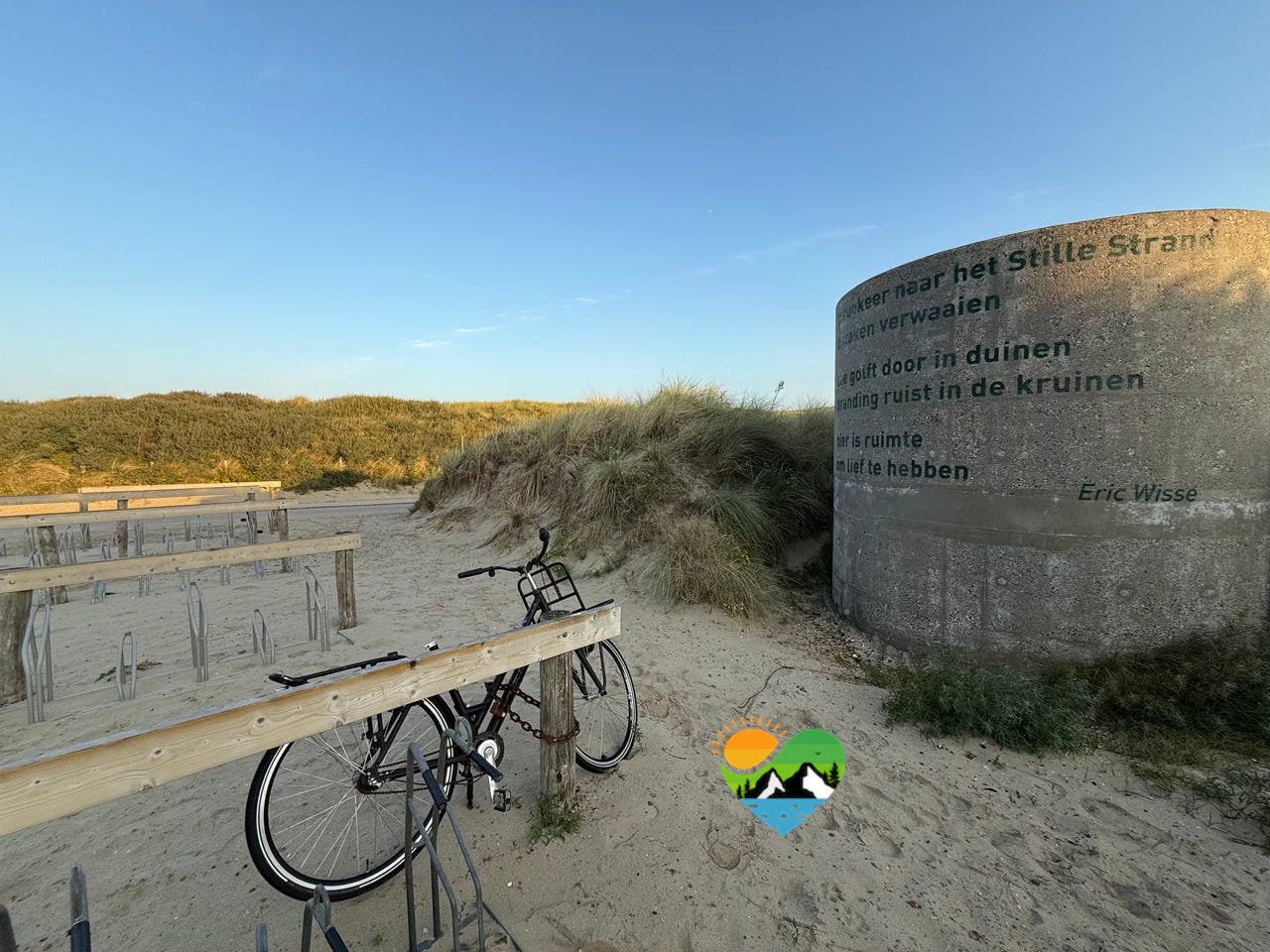
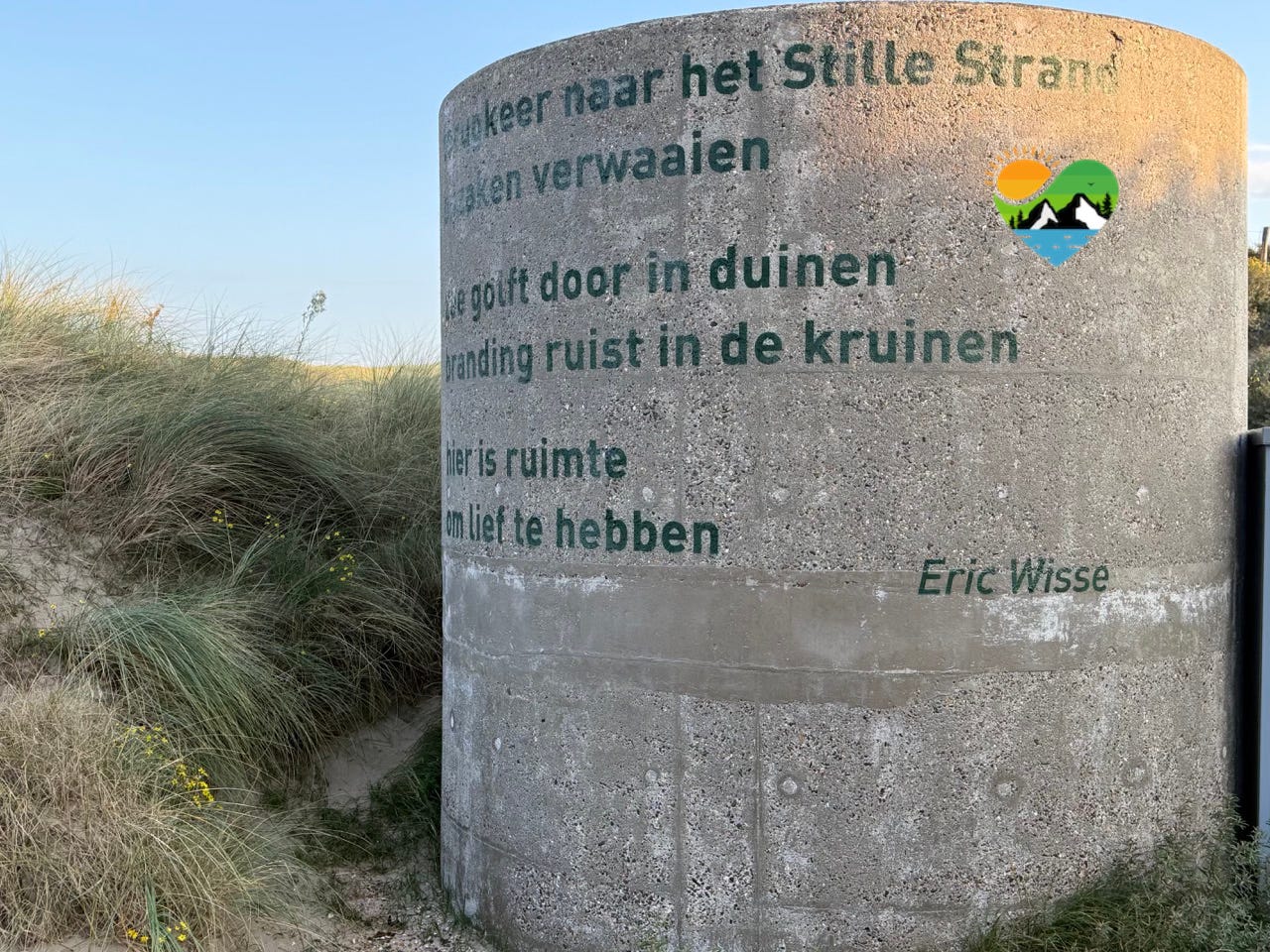
The poem “terugkeer naar het Stille Strand” (by Eric Wisse) on the cover image of this post is a picture I took during one of my runs through the beautiful dunes of The Hague, between Kijkduin and Scheveningen.
The poem was written for a circular wall of an electricity-house near the beach between Scheveningen and Kijkduin, in The Hague area. It was created with a sense of place: the mood of returning to the beach, letting “secondary matters” drift away (“bijzaken verwaaien”), sensing the sea and dunes and finding space to love (“hier is ruimte / om lief te hebben”).
Here’s a loose translation:
Return to the Silent Shore
minor matters drift away

the sea swells through the dunes
the surf whispers in the treetops

here is space
to love
Further Reading


“If I can make it here, I can make it anywhere” - I think that doesn’t just apply to New York, but anywhere unfamiliar. As an expat, you’ve done it once, and could do it again. But the fact you could, doesn’t always mean you should.